Safety guide
Can diabetics eat honey?
Can diabetics eat honey?
The American Diabetes Association and Mayo Clinic report no metabolic advantage to swapping honey for table sugar in a diabetes eating plan — both raise blood glucose, and honey should be counted toward total carbohydrate intake the same way any other sugar is. That is a report of what those bodies publish, not a rule this page or SUBUR sets, and it is not medical advice for your own diagnosis.
Honey gets asked about here because it sounds natural, and "natural" gets read as "safer". For blood sugar specifically, the sourced guidance below says that read does not hold — and explains why, in plain terms, rather than just repeating the verdict.
Does honey raise blood sugar the same way sugar does?
Table sugar (sucrose) is one glucose molecule bonded to one fructose molecule, and your digestion splits that bond before either sugar is absorbed. Honey already contains free glucose and fructose in roughly similar proportions — it never needed splitting. Both routes end at the same two absorbed sugars, which is the chemical reason the two are treated alike for blood glucose rather than honey getting credit for being unprocessed.
What the sourced guidance actually says
- American Diabetes Association / Mayo Clinic. No advantage to substituting honey for sugar in a diabetes meal plan — count it as carbohydrate like any other sugar.
- Mechanism. Honey and table sugar both break down to free glucose and fructose; the absorbed sugars are the same either way.
- Glycemic index. Reported across a wide range, roughly 35 to 87 depending on the honey's floral source — there is no single "honey GI", so no honey can claim a fixed number without its own lab test.
Why does honey's glycemic index vary so much?
Glycemic index depends on the exact mix of sugars and other compounds in a given honey, and that mix comes from whatever flowers the bees drew from. This is also why no honey seller, including SUBUR, can quote a GI number without having that specific batch tested.
Is raw or comb honey any different for blood sugar than regular honey?
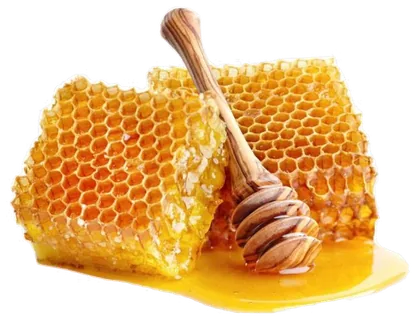
None of the sourced guidance draws that distinction. The glucose-and-fructose composition that matters for blood sugar is present in honey whether it is raw, filtered, or in the comb — processing changes texture and appearance, not the underlying sugars. A comb-and-nut blend adds a small amount of fat and protein from the nuts, which can slow how quickly a meal is digested overall, but that is a property of a mixed meal generally, not a honey-specific effect, and it is not the same thing as lowering blood glucose.
So is honey ever a reasonable choice for someone managing diabetes?
The consensus position across the sources reviewed here is moderation and counting, not exclusion and not endorsement. Honey is treated as one more source of carbohydrate to fit into a plan — see how much added sugar public-health guidance treats as a reasonable daily ceiling for the whole-diet number this sits inside, and honey vs sugar: what actually separates them for how it compares beyond blood glucose. A physician or dietitian managing an individual diagnosis will always account for details a general page cannot.
Read the source list, then ask your own clinician
This page reports what public diabetes and nutrition bodies publish about honey generally. It clears no jar for anyone's diagnosis. See SUBUR's full ingredient list before deciding whether it fits your plan.
See the full ingredient listFrequently asked questions
Can diabetics eat honey?
The American Diabetes Association and Mayo Clinic report no metabolic advantage to substituting honey for table sugar — both raise blood glucose and honey should be counted as carbohydrate. That is a summary of published guidance, not a clearance for any specific product or diagnosis.
Is honey's glycemic index lower than sugar's?
It depends on the honey. Published figures for honey's glycemic index range from roughly 35 to 87 depending on floral source, spanning both below and above white sugar's approximate 60-65. There is no single number for "honey" as a category, and no honey seller can honestly quote one without testing that specific batch.
Why do honey and sugar affect blood sugar similarly if honey is natural?
Table sugar splits into free glucose and fructose during digestion; honey already contains those same two sugars in roughly similar proportions. The body absorbs the same end products either way, which is the chemical reason the two are treated alike for blood glucose rather than honey getting a natural-food exception.
Does SUBUR honey affect blood sugar differently because it has added ingredients?
No source reviewed here tests SUBUR specifically, and none makes an exception for a comb-and-nut blend. Its ground walnut and almond add some fat and protein, which can slow overall digestion in a meal, but that is not the same as lowering blood glucose, and it is not a claim this page or SUBUR makes.
How much honey can someone with diabetes eat per day?
No source reviewed sets a diabetes-specific honey dose. The general public-health ceiling for all added and free sugar combined, from any source, is described in our <a href="/en/blog/how-much-honey-is-safe-per-day/">guide to how much honey is a safe daily amount</a> — and a diabetes management plan built with a physician or dietitian will set a more specific number than any general guide can.
Is raw honey safer for blood sugar than processed honey?
The sourced guidance does not distinguish raw honey from filtered honey on this question — the sugar composition that affects blood glucose is present either way. Processing changes texture and clarity, not the glucose-and-fructose content that matters here.