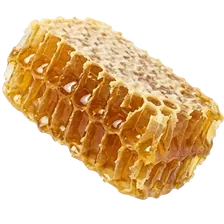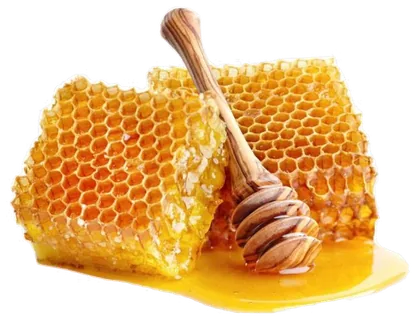
Ingredients
How is honeycomb made?
How is honeycomb made?
Young worker bees secrete wax from eight glands on the underside of the abdomen, then build it into hexagonal cells. They fill those cells with nectar, dry it down below 18% moisture, and seal each finished cell with a wax lid called a capping. Comb honey is that sealed comb, harvested intact.
Where does the wax itself come from?
From the bees, not from the flowers. The FAO describes beeswax as being secreted from eight wax glands on the underside of the abdomens of young bees. It emerges as small pale flakes, which the bee works with its mandibles until it is soft enough to shape. Fresh comb built this way is called virgin wax.
What are cappings, and why do they matter?
A capping is the wax lid a bee puts over a cell once the honey inside is finished. It is a signal, not a decoration. According to the University of Nebraska's extension guidance, shelf-stable honey has been dehydrated by the bees to below 18% moisture, and it is that low moisture which prevents fermentation.
Does harvesting honeycomb kill the bees?
No. Bees are cleared from a frame with a soft-bristled bee brush that gently moves them down into the open brood chamber, and the frame is then lifted out. The Langstroth hive is designed around exactly this: interchangeable boxes with removable frames that allow inspection, treatment and honey collection without destroying the colony.
Why is comb honey more expensive than liquid honey?
Because wax is expensive for a colony to make. Extension figures put it at roughly six to nine pounds of honey consumed for every pound of beeswax produced — the often-quoted "eight pounds" is a rounding of a measured range, not a fixed number. Liquid honey is spun out and the comb goes back to the bees; comb honey does not come back.
Liquid honey and comb honey, from the colony's side
What leaves the hive
- Liquid honey
- The honey only
- Comb honey
- Honey and the wax around it
Is the comb returned?
- Liquid honey
- Yes, spun and reused
- Comb honey
- No, built again from scratch
Effect on the colony
- Liquid honey
- Little
- Comb honey
- More prone to swarming
| Liquid honey | Comb honey | |
|---|---|---|
| What leaves the hive | The honey only | Honey and the wax around it |
| Is the comb returned? | Yes, spun and reused | No, built again from scratch |
| Effect on the colony | Little | More prone to swarming |
Producing comb also changes how a hive is run. The same guidance notes that comb production means keeping highly populated colonies in a more confined space than would be typical, which makes them more prone to swarming. Our guide to buying honeycomb honey in Malaysia covers what that means at the shelf.
Can you eat the comb itself?
The wax is edible in the sense that it passes through. JECFA's review is careful here: it notes that waxes are generally believed not to be digested or absorbed, but states plainly that there are no original research data supporting that belief. It also flagged that beeswax may have allergenic potential and that consumers should be told when it is present.
For what that means in practice — chewing, swallowing, spitting — see whether you can eat honeycomb wax. For cutting and plating a slab without shattering it, see how to serve honeycomb.
See comb in a jar, not a picture of one
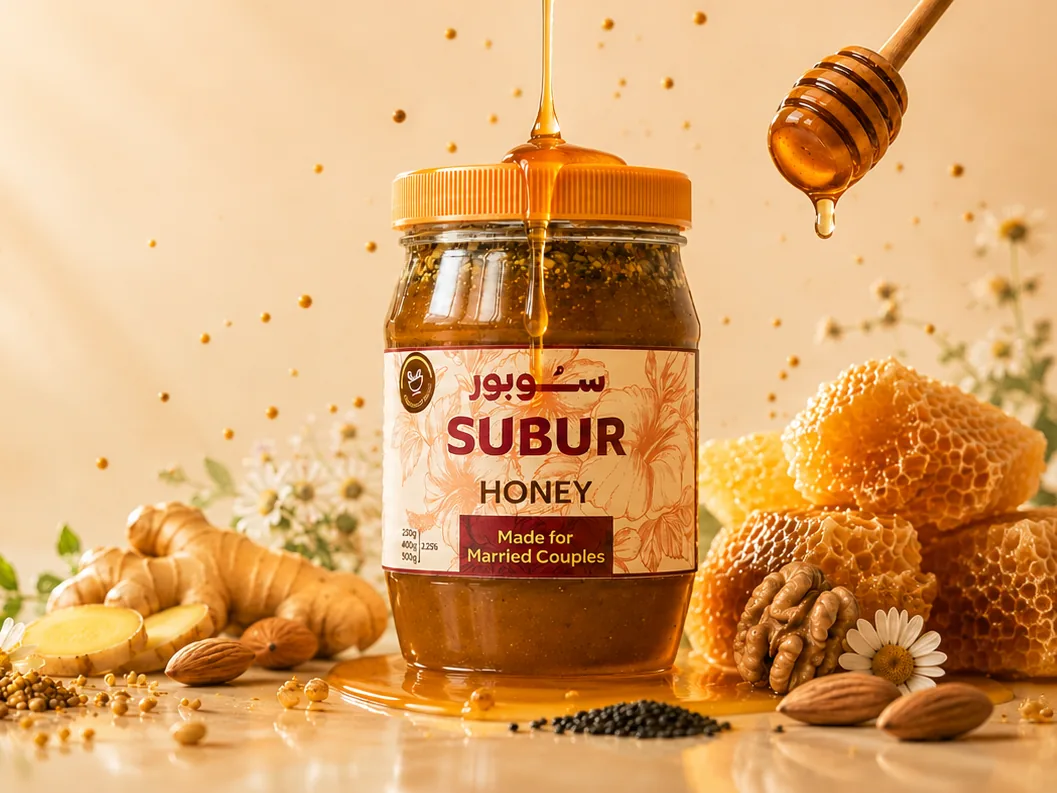
SUBUR is built on raw honeycomb rather than a processed syrup, with all ten ingredients named on the label.
See what is in the jarFrequently asked questions
Is honeycomb the same in every jar of comb honey?
No. Comb is cut from frames the bees built that season, so cell size, colour and thickness vary between slabs and between hives. Pale comb is newly drawn wax; it darkens with age and use inside the hive rather than with time on a shelf.
What does it mean when honeycomb cells are capped?
It means the bees have finished drying the honey in that cell and sealed it with a wax lid. Extension guidance states that shelf-stable honey has been dehydrated by the bees to below 18% moisture, and that low moisture is what prevents the honey from fermenting.
Is comb honey harvested by killing the colony?
No. Bees are brushed off the frame with a soft-bristled bee brush into the brood chamber below, and the frame is removed. The Langstroth hive is built around removable frames precisely so that inspection, treatment and honey collection can happen without destroying the colony.
How much honey does a colony use to make wax?
Extension figures give a range of roughly six to nine pounds of honey consumed per pound of beeswax produced. The widely repeated figure of eight pounds is a rounding of that measured range. Because none of the wax is returned, comb production is more demanding on the colony than liquid honey.
Does comb honey crystallise?
Yes. Comb honey crystallises like any other raw honey. Extension guidance notes that freezing may slow crystallisation, but nothing prevents it. Crystallisation in comb is normal behaviour rather than a fault, and it is not evidence one way or the other about whether a jar is genuine.
Is beeswax safe to swallow?
JECFA notes it is generally believed that waxes are not digested or absorbed in most mammals including humans, while stating there are no original research data supporting that claim. It also noted beeswax may have allergenic potential. Anyone with a known allergy should ask a doctor rather than a label.