Buying guide
Honeycomb honey in Malaysia: what you are actually buying
What is honeycomb honey, and what should I look for when buying it in Malaysia?
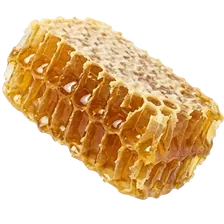
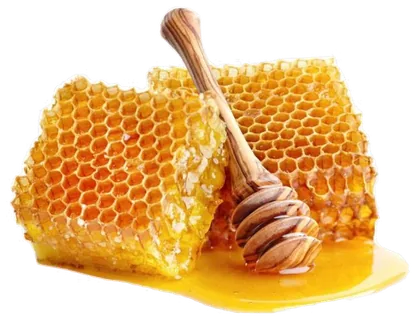
Honeycomb honey is raw comb — the wax cells bees build and cap — sold still full of honey instead of spun out of the frame. Honeycomb honey in Malaysia is usually listed as madu sarang. Look for capped cells, comb that holds its shape, and a label naming everything in the jar.
Search for it locally and you get a wall of marketplace listings — cut pieces, whole frames, plastic tubs — and nothing explaining what you are looking at. Comb is the one honey you can judge by eye before you taste it.
What is honeycomb honey, and how is it different from liquid honey?
Honeycomb honey is honey still inside the wax the bees built for it. Workers draw out hexagonal cells, fill them, then seal each one with a thin wax cap. Comb honey is cut and jarred at that stage. Liquid honey is the same honey after those caps are sliced off and the frames spun.
That single step is the whole difference, and it is why comb sits as a niche item beside rows of squeeze bottles. For the wider shelf, see the types of honey sold in Malaysia.
Comb honey and liquid honey compared
After harvest
- Comb honey
- Cut and packed as it is
- Liquid honey
- Uncapped, spun, usually filtered
What is in the jar
- Comb honey
- Honey plus the wax holding it
- Liquid honey
- Honey only
How you serve it
- Comb honey
- Spooned or cut; wax chewed or set aside
- Liquid honey
- Poured or stirred
| What you are comparing | Comb honey | Liquid honey |
|---|---|---|
| After harvest | Cut and packed as it is | Uncapped, spun, usually filtered |
| What is in the jar | Honey plus the wax holding it | Honey only |
| How you serve it | Spooned or cut; wax chewed or set aside | Poured or stirred |
Why is honeycomb honey in Malaysia priced above liquid honey?
Comb is priced higher because the wax leaves the hive with it. A beekeeper who extracts honey returns the drawn frame and the bees refill it; one who sells comb gives that structure away each harvest, and the colony rebuilds it. Comb must also be cut, handled and packed without breaking.
What should you look for in a comb honey jar?
Look at the cells first: capped comb has a matte, slightly domed wax film sealing them, while open cells look wet and glassy. Then look at how the piece sits, because comb holding its shape has been handled carefully. Finally read the label and check every ingredient is named on it.
Four things a comb jar shows you
- Capping. Sealed cells under a dull wax film. Open cells along a cut edge are normal.
- Cell structure. Cell walls vary a little, but cut comb is drawn on flat foundation, so a regular sheet is normal. A photograph cannot settle it either way.
- How it sits. Comb is lighter than honey, so a piece rides high rather than sinking.
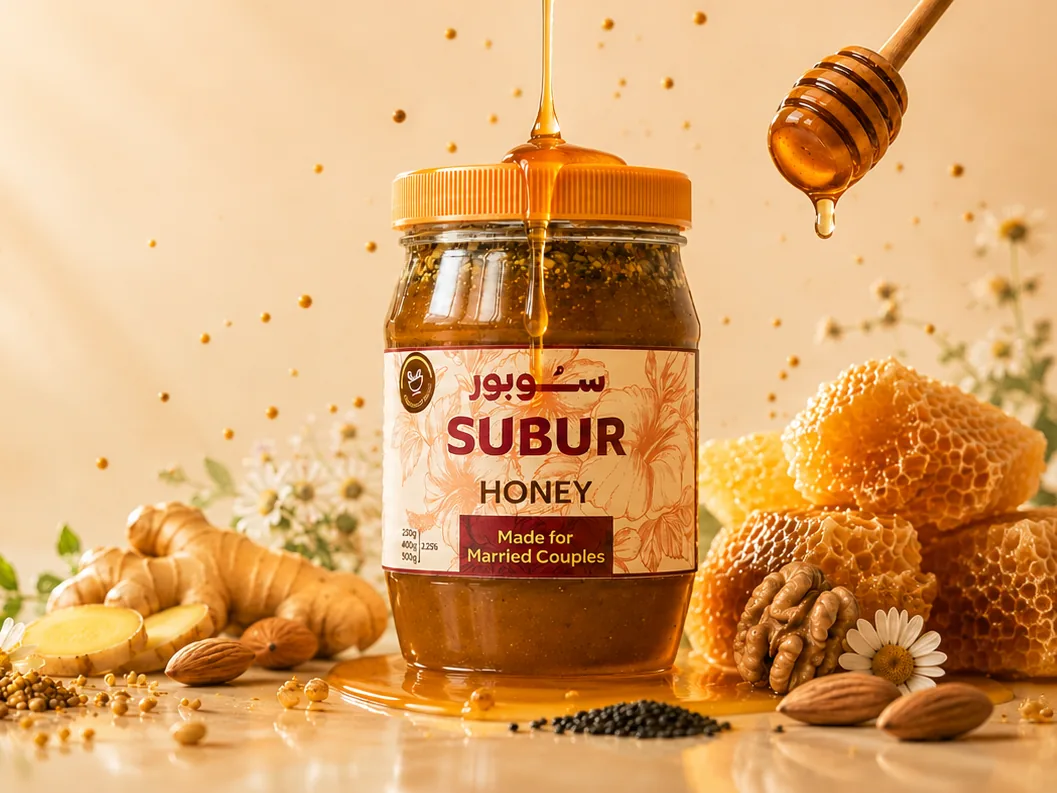
- The ingredient list. If a jar holds more than comb and honey, the rest belongs on the label — the ten ingredients in SUBUR are printed for that reason.
Weight is worth a word too. When comb is sold by weight the wax is weighed with it. That is not a trick — the two cannot be separated — but a comb jar and a liquid jar of the same stated weight hold different amounts of honey.
What changes when comb is the base of a blend, not the whole product?
In a plain comb jar the comb is the product. In a blend it is the base: raw honeycomb sits under spices, seeds and nuts, so the jar is no longer a clean square of wax against clear honey. The comb breaks up as you spoon it, and the surface around it is busy rather than clear.
What you get instead is texture — wax to chew, ground nut and spice grains against the sweetness. Swallowing the wax or setting it aside is preference, not rule, and the guide to eating honeycomb wax covers it.
Where do you buy honeycomb honey in Malaysia?
Most comb here moves through marketplace listings, so you judge it from a photograph. The alternative is a counter, where you can turn the jar, look at the comb from the side and ask what is in it before you pay. Both are legitimate; only one lets you inspect first.
SUBUR is sold by Berkat Madinah Store and nowhere else — two branches in Selangor plus the store's own Shopee and TikTok Shop, not supermarkets or pharmacies. Branch details sit on the page listing where to buy SUBUR.
How should you choose your first comb jar?
Decide what you want the comb for before comparing jars. If you want to see and cut comb, buy a plain comb jar and judge it on capping and structure. If you want comb inside something spiced and chewable, buy a blend and judge it on its ingredient list instead.
Before you buy
- Look at the comb — capping, the cell walls, a piece that holds together.
- Read the ingredient list before the marketing copy.
- Accept that wax counts as weight; stop comparing comb to liquid honey by the gram.
- Ask the seller what the label leaves open; a sourceless answer is no answer.
Comb is the first of ten
Raw honeycomb is the base SUBUR is built on, and the other nine ingredients are named rather than hinted at.
See the full blendFrequently asked questions
Is honeycomb real honey?
Yes. Honeycomb is honey in the state the bees stored it, sealed inside the wax cells they built for it. Nothing has been added and nothing removed. Liquid honey is the same honey after the wax caps are cut away and the frames are spun in an extractor to empty the cells.
What does madu sarang mean?
Madu sarang is the Malay term Malaysian sellers use for comb honey — madu is honey, sarang is the nest or comb. Listings often carry both words and the English term in one title, because English-speaking and Malay-speaking buyers are searching for the same jar with different vocabulary.
Why is honeycomb honey more expensive than liquid honey?
Because the wax leaves the hive with it. An extracted frame goes back for the bees to refill, while a frame sold as comb has to be rebuilt from scratch. Comb also has to be cut, handled and packed without breaking, and it carries a premium simply for being visibly difficult to fake.
Can you judge honeycomb honey from a photograph?
Only partly. A photograph shows the colour, whether the piece looks intact, and whether the cells appear sealed. It cannot show you how the comb behaves when the jar is tilted, and it cannot show you the ingredient list. Ask the seller to photograph the back label before you order.
Can comb honey be sold in plastic?
Yes, and plenty is — plastic tubs travel better than glass and are common in marketplace listings. The container tells you nothing about the comb inside it. What matters is whether the piece arrived intact, whether the cells are capped, and whether the label names everything in the tub.
Is comb honey better than liquid honey?
It has been through less processing, since it is never uncapped, spun or filtered. That is a description of handling, not a health claim, and Malaysian food rules do not permit a seller to turn it into one. Comb is bought for its texture, its appearance, and the fact that it was never extracted.
Does the weight of honeycomb honey include the wax?
Yes, the wax is weighed with the honey because it is part of what you receive. That means a comb jar holds less liquid honey than a jar of the same stated weight. No seller can tell you the exact split without cutting the comb apart, so treat any precise percentage as a guess.
Where can I buy honeycomb honey in Malaysia?
Most comb is sold through online marketplaces, where you judge it from a photograph. Some specialist shops sell it over a counter, which lets you look at the comb from the side and ask what is in the jar first. SUBUR is sold only by Berkat Madinah Store, in Selangor and through its own online storefronts.