Buying guide
Types of honey in Malaysia, mapped
What types of honey are sold in Malaysia?
The types of honey in Malaysia fall into a few groups: kelulut from stingless bees, tualang and gelam named after the trees the bees work, wild or forest honey, imported multifloral honey, and blends where honey is packed with other named foods. They differ by taste, moisture, colour and production.
Walk into a shop in the Klang Valley and the labels do not describe the same kind of thing. Some name a bee, some a tree, some a method, some nothing at all. Sorting that out is most of the job.
What are the main types of honey in Malaysia?
Five categories cover almost everything on a Malaysian shelf. Kelulut is stingless bee honey. Tualang and gelam are named for the trees the bees forage. Wild or forest honey describes a collection method, not a floral source. Imported multifloral honey is the supermarket default. Blends are honey packed with other foods.
The Malaysian honey shelf, by what is in the jar
Kelulut (stingless bee)
- What it is
- Stingless bee honey, stored in small resin pots, not wax comb
- What you notice in the jar
- Thin, pours like syrup, sour behind the sweetness
Tualang
- What it is
- From combs built high on tualang trees by open-nesting bees
- What you notice in the jar
- Dark, runny, sharp, faintly smoky; sold liquid
Gelam
- What it is
- From bees working gelam trees in coastal swamp country
- What you notice in the jar
- Deep amber to brown, heavier, with a resinous finish
Wild or forest (madu hutan)
- What it is
- A way of gathering, not a floral type
- What you notice in the jar
- Varies batch to batch with the nest and the season
Imported multifloral
- What it is
- Pooled from many hives, often many countries, then filtered
- What you notice in the jar
- Clear, mild, identical jar after jar
| Type | What it is | What you notice in the jar |
|---|---|---|
| Kelulut (stingless bee) | Stingless bee honey, stored in small resin pots, not wax comb | Thin, pours like syrup, sour behind the sweetness |
| Tualang | From combs built high on tualang trees by open-nesting bees | Dark, runny, sharp, faintly smoky; sold liquid |
| Gelam | From bees working gelam trees in coastal swamp country | Deep amber to brown, heavier, with a resinous finish |
| Wild or forest (madu hutan) | A way of gathering, not a floral type | Varies batch to batch with the nest and the season |
| Imported multifloral | Pooled from many hives, often many countries, then filtered | Clear, mild, identical jar after jar |
Why does kelulut honey cost more than other honey?
A stingless bee colony yields a fraction of what a honeybee colony yields, and it stores that honey in small sealed pots that are drained one at a time rather than uncapped from a frame. More colonies, more hours and more careful handling go into the same volume of jar.
Kelulut also carries more water, so it stays runny and will ferment if left warm and open. Storing it properly costs the seller something a thick filtered honey never costs. Thin and sour is what this honey is, not a fault.
What is tualang honey, and how is gelam honey different?
Tualang honey comes from combs hung high on tualang trees by large open-nesting bees, so harvesting means climbing rather than lifting a lid. Gelam honey comes from bees working gelam trees in coastal swamp forest. Both names describe where the bees fed, not how the honey was handled afterwards.
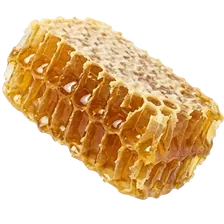
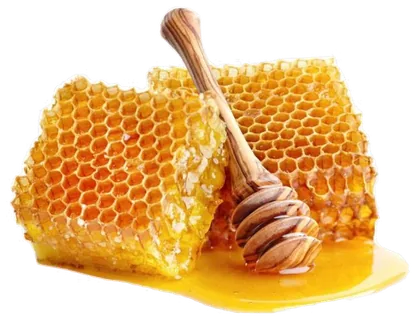
Side by side, tualang pours more freely and tastes sharper; gelam sits heavier and darker. Neither is a grade. For what raw comb is, and why a comb jar behaves differently from a liquid one, read the guide to honeycomb honey in Malaysia.
What does wild honey or madu hutan actually mean?
Madu hutan describes how the honey was collected, not which flowers made it. Comb is cut from a nest found in forest, a roof space or a roadside tree, then drained or pressed. Two jars sold under that same name can differ in colour, thickness and taste.
Where does a spiced comb blend sit on this shelf?
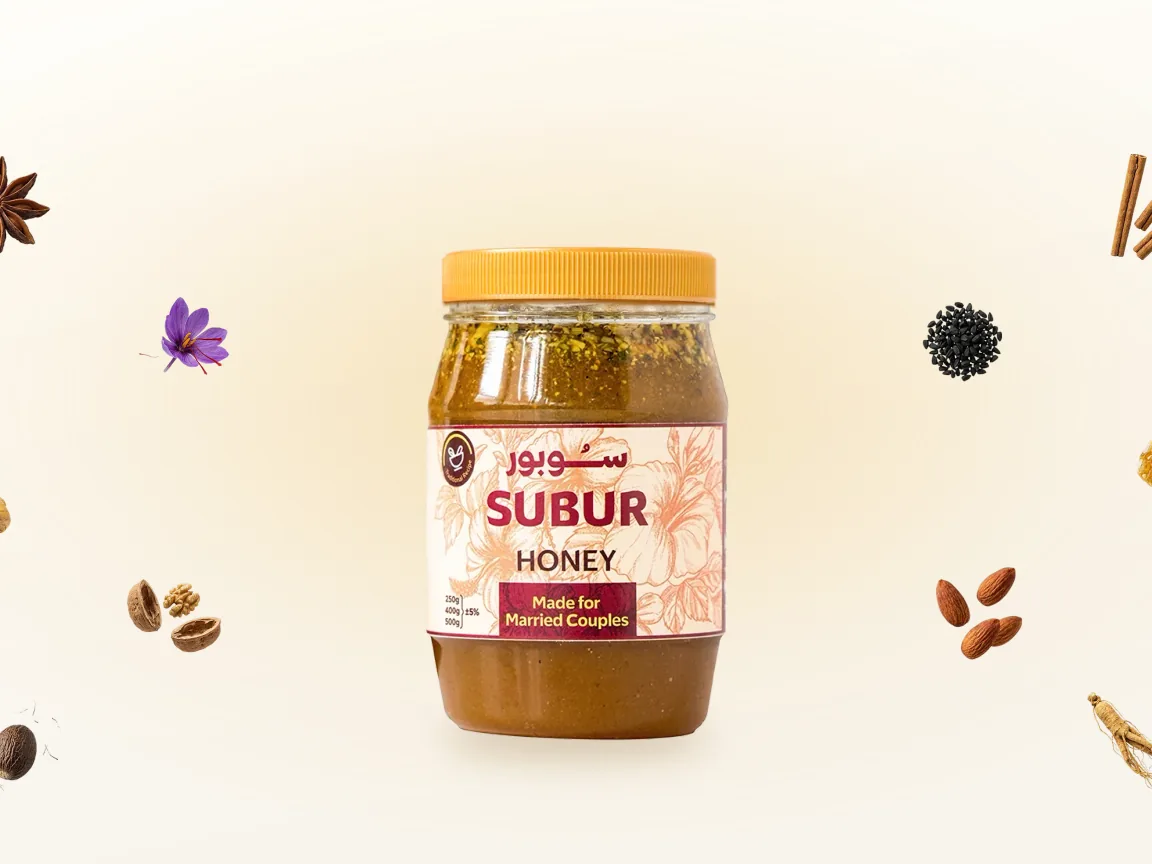
A spiced comb blend sits off to one side of the Malaysian honey shelf rather than on it. A blend is a different product class, not a competitor to kelulut or tualang, and the buyer should choose by what they want to do with it. A single-source honey is bought for one flower, one place, one season. A blend is bought for the whole spoonful.
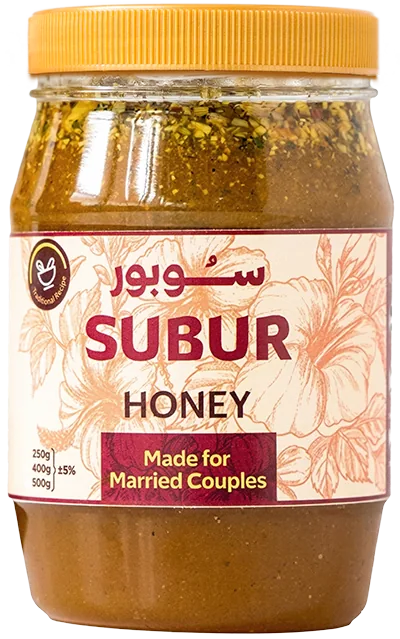
SUBUR is a blend built on raw honeycomb with black seed, saffron, ginseng, ginger, cinnamon, star anise, nutmeg, walnuts and almonds, and all ten ingredients are named in full. It is not sold as kelulut, tualang or gelam, and no floral source is published for it. There are no dates in it either.
Three shelf positions, three questions
- Single-source honey. Named bee or named tree. The question is provenance: which tree, which state, which season.
- A blend that names everything. Honey plus other named foods. The question is disclosure: is everything on the label really in the jar?
- A blend that names nothing. "Selected herbs", "secret recipe". Nothing here can be checked, which is why it is phrased that way.
Which honey suits tea, cooking, or eating by the spoon?
Match the honey to the job. Thin, sour kelulut keeps its character in a cold drink. Mild imported multifloral is the cheapest thing to cook with, because heat flattens flavour anyway. A dark varietal is worth tasting on its own. A comb blend with nuts in it is a spoon product.
A rough order of preference
- Hot drinks. Let the drink cool to warm, then stir in a mild liquid honey.
- Cooking. Use the plainest honey you own. Wax, nuts and whole spice will not disperse.
- Straight off the spoon. Where a varietal or a comb blend earns its keep.
- An imported jar with a grade. A separate comparison — what a Manuka grade measures against local honey answers it.
So do not ask which honey is best. Decide whether you want one flower or a full spoonful, then ask the question that fits: where did this come from, or what exactly is in it. To see a comb blend in person, the two Selangor counters that stock it are on the retail page.
A blend, and it says so
SUBUR does not claim a varietal name or a forest. It is raw honeycomb with nine other named ingredients, all written down.
See what is insideFrequently asked questions
What is the difference between kelulut and tualang honey?
Kelulut comes from stingless bees that store honey in small resin pots; it pours thin and tastes distinctly sour behind the sweetness. Tualang comes from large open-nesting bees on tualang trees and is darker, runnier than comb honey, and sharper in flavour. Different bees, different harvests, different eating experiences.
Why is kelulut honey more expensive than ordinary honey?
A stingless bee colony produces far less honey than a honeybee colony, and that honey sits in sealed pots drained individually rather than uncapped from a frame. It also holds more water, so it needs cooler, tighter storage. More colonies, more labour and more careful handling stand behind the price.
What does madu hutan or wild honey mean?
It describes the way the honey was gathered, not the flowers behind it. Someone found a nest in forest or on a building, cut the comb and drained or pressed it. Because each nest and season differs, two jars carrying the same wild-honey name can look and taste noticeably different.
Is blended honey lower quality than pure single-source honey?
No — it is a different product class. A single-source honey is bought for one flower, one place and one season. A blend is bought for honey plus the other foods mixed into it. The fair test for a blend is whether the label names everything inside, not whether it matches a varietal.
What is gelam honey?
Gelam honey comes from bees foraging gelam trees, which grow in coastal swamp country along parts of the peninsula. In the jar it tends to be deep amber to brown, heavier on the spoon than tualang, and resinous in the finish. The name refers to where the bees fed, not to processing.
Which honey is best for tea in Malaysia?
A mild liquid honey, added after the drink has cooled from boiling to warm. A honey you chose for its flavour is wasted in a very hot cup, and a comb blend holding wax and nuts will not dissolve at all. Save the interesting jars for eating off a spoon.
Is imported multifloral honey still real honey?
It can be. Multifloral simply means honey pooled from many hives, and often many countries, then filtered so every jar tastes the same. That sameness is the product. What it cannot tell you is which flowers or which place it came from, which is exactly what a single-source jar is sold on.
How do I know which type of honey I am actually buying?
Read the label for the parts that are defined: net weight, packer details, batch and ingredient list. Then ask the seller the question that matches the jar — which tree and which state for a varietal, or what exactly is inside for a blend. Vagueness on either question is the answer.