Kitchen guide
Baking with honey instead of sugar, in grams and °C
How do I bake with honey instead of sugar?
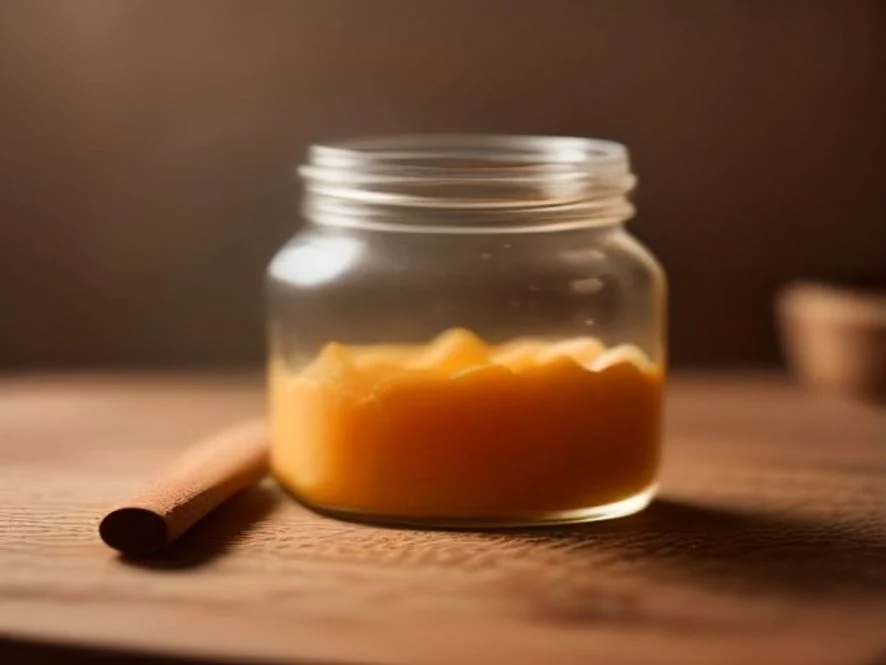
Baking with honey instead of sugar works out at about 128 g of honey for every 100 g of sugar, with roughly 20 ml of liquid taken back out per 100 g of honey and the oven set about 15°C lower than printed. Weigh the honey rather than spooning it.
Every chart that ranks for this question was written in an American kitchen — cups of sugar, cups of honey, an oven dial in Fahrenheit. A Malaysian baker runs two conversions before the advice is usable, and the first one goes wrong for a reason nobody mentions.
What is the metric conversion for baking with honey instead of sugar?
Start at about 128 g of honey per 100 g of sugar — roughly one and a third times the weight — take about 20 ml of other liquid back out per 100 g of honey, and drop the oven about 15°C. The charts print that as three-quarters of a cup per cup of sugar, which sounds like less; honey is dense enough that it lands heavier on a scale, not lighter.
Swapping honey for sugar, in metric
Every 100 g of sugar
- What to do instead
- About 128 g of honey
- Why
- Honey is far denser than sugar
Every 100 g of honey added
- What to do instead
- Take out 20 ml of other liquid
- Why
- Honey brings its own water
An oven printed at 180°C
- What to do instead
- Set it to about 165°C
- Why
- Honey colours sooner than sugar
The printed baking time
- What to do instead
- Check 5–10 minutes early
- Why
- A dark top looks done before the middle
| In the recipe | What to do instead | Why |
|---|---|---|
| Every 100 g of sugar | About 128 g of honey | Honey is far denser than sugar |
| Every 100 g of honey added | Take out 20 ml of other liquid | Honey brings its own water |
| An oven printed at 180°C | Set it to about 165°C | Honey colours sooner than sugar |
| The printed baking time | Check 5–10 minutes early | A dark top looks done before the middle |
Why do you have to take liquid out of the recipe?
Honey is a liquid, so it arrives carrying water that granulated sugar never brought. Leave the milk or water untouched and the batter runs wetter than the recipe was written for — a slack crumb, a sunken middle, a centre still tacky when the top looks done.
Why does a honey bake brown so much faster?
Honey browns at a lower temperature than granulated sugar, and it is hygroscopic — it holds water at the surface, which keeps browning running. The top colours well ahead of the inside. Drop the oven roughly 15°C and lay foil loosely over the tin once it darkens.
That hygroscopy is the honest advantage of the swap: a honey crumb stays soft longer. It is also why an open jar pulls water out of humid Malaysian air.
Which bakes take the swap, and which fight it?
Bakes already dark, moist and strongly flavoured take honey easily — banana bread, carrot cake, gingerbread, oat cookies, glazes and marinades. Bakes built on dry sugar crystals or on staying pale do not: meringue, buttercream, a creamed sponge and a piped sugar cookie.
Where the swap works, and where it does not
- Works: dark, moist, spiced bakes. Banana bread, carrot cake and gingerbread are already brown and heavily flavoured, so honey disappears into them.
- Fights back: anything whipped. Meringue and buttercream need dry sugar crystals for structure; a liquid sweetener will not build it.
- A different question altogether. Where a recipe asks for gula melaka, the swap is about flavour, not mechanics — the two do different jobs.
How do you convert a recipe you already have?
Work in weight and change one thing at a time. Weigh the sugar the recipe asks for, weigh about one and a third times that in honey, take the matching liquid out, drop the oven and check early. Write down what you did — the second attempt settles the ratio.
Converting a recipe, in order
- Weigh the sugar the recipe calls forWork from the printed gram figure, not a converted cup measure.
- Weigh about one and a third times that in honeyInto the bowl on a zeroed scale. Warm the closed jar first if it has set firm.
- Remove 20 ml of liquid per 100 g of honeyMilk or water first. Leave the eggs alone.
- Add 1 g of bicarbonate per 250 g of honeyOnly for a batter already raised that way, because honey is mildly acidic.
- Drop the oven by about 15°CA recipe printed at 180°C goes in at 165°C.
- Check 5–10 minutes earlyJudge it with a skewer, never by the colour of the top.
Should you bake with a spiced honeycomb blend?
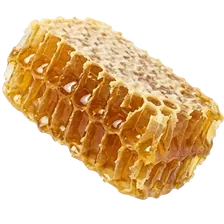
No — and that includes ours. A raw honeycomb blend carrying wax, ground walnut and almond and seven named aromatics is the wrong tool for a batter. The wax will not emulsify, the ground nuts change the crumb, and the oven flattens the fragrance you paid for.
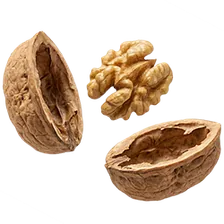
The walnut and almond are ground into the honey rather than sitting on top, so they enter the crumb whether the recipe wanted nuts or not. And saffron, star anise, nutmeg, cinnamon and ginger turn a plain sponge into a spice cake.
Which honey to buy for the oven
A mild, filtered, pourable honey — the inexpensive bottle. Heat flattens delicate floral character anyway, which is where our guide to the honey types sold in Malaysia lands too.
The jar for the spoon, not the oven
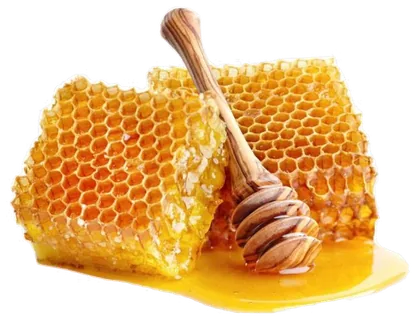
SUBUR is a raw honeycomb blend — better drizzled over a finished bake than creamed into a batter. See the ten ingredients, named.
See the full blendFrequently asked questions
How much honey replaces 100 g of sugar?
Start at about 128 g of honey for every 100 g of granulated sugar — roughly one and a third times the weight — then adjust on the second attempt. The published charts call for less honey by volume because honey is far denser, not because a gram of it is sweeter; honey is about 17 per cent water, so by weight it is not sweeter than sugar. Weigh it rather than measuring by spoon.
Do I need to lower the oven when baking with honey?
Yes. Honey colours at a lower temperature than granulated sugar, so the surface browns ahead of the crumb. Set the oven about 15°C below the printed figure — a recipe written for 180°C goes in at 165°C. If the top still darkens too early, lay a sheet of foil loosely over the tin.
Why did my honey cake come out dark outside and raw in the middle?
Two causes, usually together. The oven was left at the printed temperature, so the surface browned before the centre set, and the liquid was not reduced, so the batter was wetter than the recipe expected. Drop the oven about 15°C, take roughly 20 ml of liquid out per 100 g of honey, and test with a skewer.
Do I really have to take liquid out of the recipe?
For anything with a pourable batter, yes. Honey is a liquid and brings water into the bowl that granulated sugar did not, so leaving the milk or water untouched gives you a slack crumb and a sunken middle. Reduce the milk or water, not the eggs, which are doing structural work as well.
Why add bicarbonate of soda when baking with honey?
Because honey is mildly acidic, so a batter raised with bicarbonate of soda has more acid to neutralise than the recipe allowed for. The conversion charts add roughly a gram of bicarbonate per 250 g of honey. It applies only to recipes already raised that way — leave a baking-powder or yeast recipe alone.
Can I bake with raw honey?
You can, and it behaves in a batter exactly like any other honey of the same thickness. What you lose is the aroma, because oven heat flattens the delicate floral notes a raw honey is bought for. That is an argument for baking with the cheap mild bottle and keeping the raw jar for the spoon.
Can I bake with a honeycomb blend that has nuts and spices in it?
It is the wrong jar for the job. Wax does not emulsify into a batter, ground walnut and almond change the crumb whether the recipe wanted nuts or not, and saffron, star anise, cinnamon, nutmeg and ginger will overwrite whatever you are making. Drizzle it over the finished bake instead.
Which bakes should I not use honey in?
Anything that needs dry sugar crystals or needs to stay pale. Meringue and buttercream rely on undissolved sugar for structure and will not build with a liquid sweetener. A plain butter cake, a white sponge or a piped sugar cookie will come out darker and taste of honey — a different bake, not a lighter one.
Is honey a healthier sweetener to bake with than sugar?
This page does not answer that, deliberately. It is a nutrition question rather than a baking one, and Malaysia's food rules do not let a honey seller make that call. What is on offer here is mechanical: ratios, liquid, oven temperature and browning. For anything else, ask a health professional rather than a honey seller's blog.