Travel guide
Can you bring honey on a plane from Malaysia?
Can you bring honey on a plane from Malaysia?
Usually yes, but where you put it decides. Security treats honey as a liquid or paste however solid it looks, so a table jar belongs in checked baggage rather than the cabin. Whether it may enter the country you land in is set by that country's customs, not by Malaysia. Ask your airline and your destination first.
You search this the week before you fly, jar already on the counter. What comes back is a prohibited-items list that never says the word honey, or a page built around United States security rules that have no bearing on the checkpoint at KLIA. Nothing addresses a heavy glass jar with comb in it.
Can you bring honey on a plane in your hand luggage?
Hand luggage is the hard route. Security applies the liquids, aerosols and gels limit in force at the airport you are leaving, and that allowance is small — smaller than a table jar. The figure differs by country and is revised periodically, so read it on your departure airport's own site.
Which makes checked baggage the practical answer, since the liquids limit is a cabin-baggage rule. That swaps one problem for another: the constraint becomes weight, and glass. Whether the jar lands intact is a packing question before it is a rules question — and the one part you control.
Why is honey treated as a liquid when the jar looks solid?
Because checkpoints classify by behaviour, not appearance. Anything that pours, spreads or squeezes from a tube falls into the liquids, aerosols and gels group, and honey sits in it comfortably — even crystallised firm enough to stand a spoon in. Not a judgement an officer will reopen at the belt.
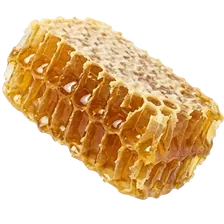
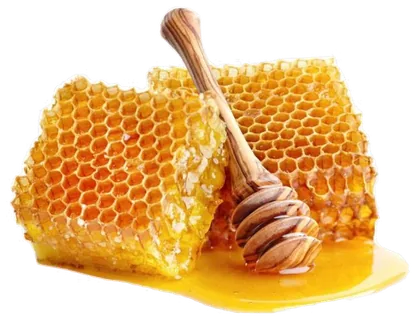
A slab of comb floating on top changes nothing. Wax is lighter than honey and rises to the surface, as the guide to honeycomb honey in Malaysia explains, and ground walnut and almond are lighter than honey too, so they rise with it. Underneath is still a viscous liquid.
Who decides the rule — your airline, the airport, or the country you land in?
Three separate authorities, one per stage. Security at the airport you leave decides what passes the checkpoint. Your airline decides what may be checked in and whether breakage is covered. Customs in the country you land in decides what may enter — and Malaysia has no say in that last one.
Who sets the rule for each route
Cabin baggage
- Who sets the rule
- Security at your departure airport, and at every airport you transit
- What to check first
- That airport's liquids limit, against the volume on your container
Checked baggage
- Who sets the rule
- Your airline: weight, food, fragile goods
- What to check first
- That glass is accepted, and whether breakage is covered
Bought after security
- Who sets the rule
- The airport, the airline and the arrival country
- What to check first
- That a transit stop will not re-screen you
Posted or couriered
- Who sets the rule
- The operator, plus arrival customs
- What to check first
- That bee products may be sent there at all
Arrival
- Who sets the rule
- Customs of your destination, nobody else
- What to check first
- Its food import rules, and the arrival card
| Route | Who sets the rule | What to check first |
|---|---|---|
| Cabin baggage | Security at your departure airport, and at every airport you transit | That airport's liquids limit, against the volume on your container |
| Checked baggage | Your airline: weight, food, fragile goods | That glass is accepted, and whether breakage is covered |
| Bought after security | The airport, the airline and the arrival country | That a transit stop will not re-screen you |
| Posted or couriered | The operator, plus arrival customs | That bee products may be sent there at all |
| Arrival | Customs of your destination, nobody else | Its food import rules, and the arrival card |
How do you pack a glass jar of honey in checked baggage?
Assume the bag will be thrown, not placed. The jar needs three layers — a lid that will not weep, a bag that catches it if it does, padding that absorbs the shock — and a position. Buried mid-case in clothes beats a wall or a wheel.
Five steps to a jar that lands intact
- Test the lid over the sinkTighten it, turn the jar upside down. Honey at the rim means the lid alone will not hold.
- Tape the rimOne turn of tape stops the lid backing off under hours of vibration.
- Double-bag itThe first zip bag catches a leak, the second saves your clothes if the glass goes.
- Wrap the whole jarA towel around base and lid as well as the sides, which is where most people stop.
- Bury it, then shake the caseClothes on all six sides, then shake. Any sliding sound means the padding is short.
Does a full jar travel better than a half-used one?
Yes, and the reason is headspace. A sealed full jar holds almost no air, so the contents cannot slosh or slam against the glass. A part-used jar has a free surface that throws honey about with every jolt, works wax up under the lid, and makes a weeping seal likelier.
The hold is gentler than people assume: on passenger aircraft it is pressurised and temperature-controlled, so the flight does the honey no harm. What you see on arrival is cosmetic — comb shifted, texture stiffer. Both settle at room temperature, and the storage guide covers a humid kitchen.
What should you settle before you book?
Work backwards. Ask customs in your destination first — if bee products cannot enter, nothing after that matters. Then ask your airline about food and glass in the hold. Then, and only then, buy the jar. The reverse order is how people surrender honey at a checkpoint.
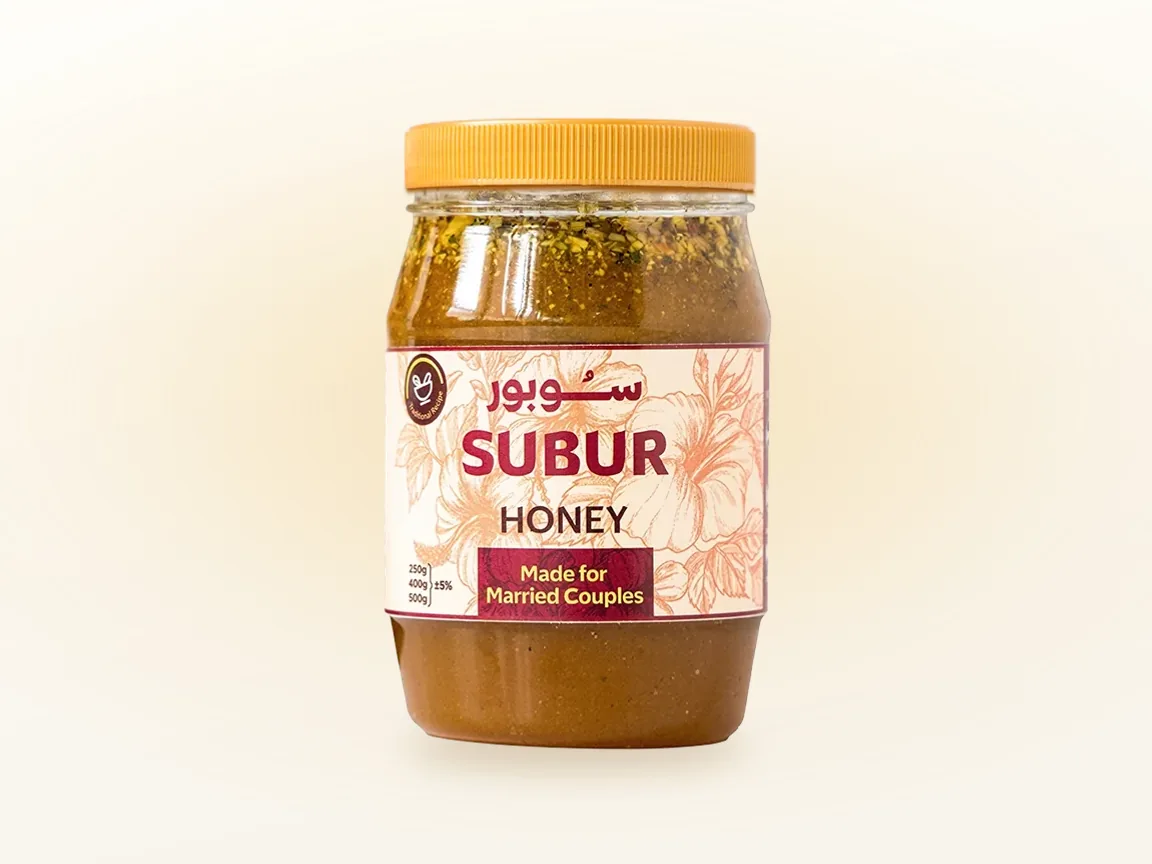
Buy it a few days ahead, from the places listed on the retail page, and leave the label on — it answers the question if you are asked what you are carrying, and what a Malaysian label must show is worth reading first.
Know what is in the jar you are carrying
Ten ingredients, each one named on the label — no secret blend, no vague description.
See the ten ingredientsFrequently asked questions
Is honey allowed in hand luggage on a flight leaving Malaysia?
It is not banned as an item, but it is screened as a liquid, aerosol or gel, and that category has a small volume allowance at the airport you leave and at every airport you transit. A table jar will not fit inside it. Read the limit on your departure airport's own site.
Does honeycomb count as a solid at the security checkpoint?
No. Screening classifies by behaviour rather than by how something looks, and a jar of comb honey still pours and spreads. The wax cap floats because it is lighter than honey, which makes the jar look like a solid block from outside — but what is beneath it is what the officer classifies.
Will security confiscate my honey if it is over the cabin limit?
The usual outcome is that anything over the allowance does not come through the checkpoint with you, and by then the option to check it in has passed. That is why the decision belongs at packing time, not at the gate. If you are unsure, checked baggage removes the question, since the liquids limit is a cabin-baggage rule.
Can I buy honey after security and take it on board?
Often, but it is not a guarantee. Purchases made past the checkpoint normally travel in a sealed bag with the receipt inside. A transit airport may still re-screen you and apply its own rules, and customs at your destination remains the final word on whether it may enter. Ask before you rely on this route.
Do I have to declare honey when I land?
If the arrival card asks about food, agricultural goods or animal products, then yes — honey is a bee product. Declaring costs you nothing and lets the officer decide by the rule rather than by suspicion. Keep the jar labelled so its contents can be read on the spot instead of guessed at.
Can I post honey overseas instead of carrying it?
Sometimes, and it depends on two things at once: what the postal or courier operator accepts, and whether bee products may enter the destination at all. For SUBUR, delivery options are set by the marketplace platforms rather than the store, so check the listing or ask on the <a href="/en/contact/">enquiry line</a>.
Is plastic safer than glass for flying with honey?
Plastic will not shatter, so it removes one failure mode. But the seal is what actually leaks, and a transferred jar loses the printed label that answers a customs question. If you are travelling with honey in glass, spend the effort on the lid, the bags and the padding rather than on decanting it.
Does a long flight change the honey itself?
Not in any way that matters. The baggage hold on a passenger aircraft is pressurised and temperature-controlled, so the honey meets nothing extreme. You may find the comb has moved and the texture stiffened in the cold, making the first spoon harder work. A few hours at room temperature reverses both.