Health
Honey as an Energy Source
Does honey work as a source of quick energy?
Yes. Honey is roughly 80% natural sugar — mainly glucose and fructose — which the body absorbs and uses quickly as fuel. A tablespoon has about 60-64 kcal, making it a simple, whole-food way to get a short burst of usable energy, similar to eating a piece of fruit.
What "Honey as an Energy Source" Really Means
This article is about quick dietary energy from natural sugars, not about stamina, vitality or performance. Honey is mostly glucose and fructose, the same sugars found in fruit — a spoonful works much like eating a banana, a fast source of usable fuel for muscles and brain.
How Honey Fuels Quick Energy
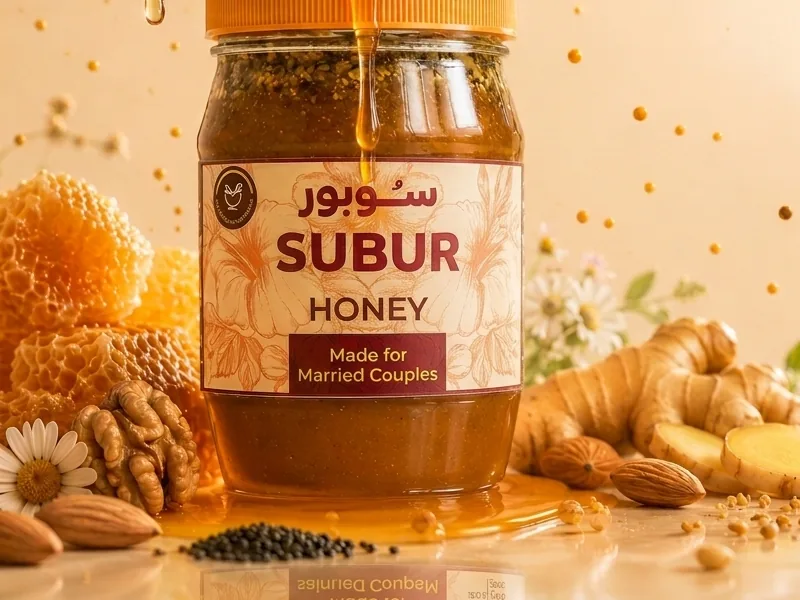
Honey is roughly 80% sugar, split mainly between glucose and fructose. Glucose is absorbed straight into the bloodstream as the primary fuel muscles and brain run on, while fructose is processed a little differently and stretches that supply a bit longer. Together they make a fast, easily digested carbohydrate — unlike a spoon of white sugar, it arrives with the character of a whole food. SUBUR Honey takes this further as a blend of raw honeycomb with nine other named ingredients, which doesn't change the basic sugar-for-fuel mechanism but does make a spoonful feel like real food.
Honey vs Refined Sugar vs a Sports Gel
For a quick pick-me-up, honey sits between plain white sugar and a commercial energy gel: it's a whole food like sugar, but arrives blended with real ingredients rather than being a single isolated compound like most gels. Here's a simple side-by-side of where honey fits for an everyday energy boost.
Honey compared with refined sugar and a sports energy gel
Source
- Honey
- Whole food, or a blend
- Refined white sugar
- Isolated sucrose
- Sports energy gel
- Manufactured, with additives
Sugar type
- Honey
- Glucose and fructose
- Refined white sugar
- Sucrose
- Sports energy gel
- Usually maltodextrin
Calories per serving
- Honey
- ~60-64 kcal / tbsp
- Refined white sugar
- ~45-50 kcal / tbsp
- Sports energy gel
- Varies, often higher
Extra content
- Honey
- Trace plant compounds
- Refined white sugar
- None
- Sports energy gel
- Electrolytes, caffeine in some
Everyday use
- Honey
- Tea, toast, pre-workout
- Refined white sugar
- Baking, drinks
- Sports energy gel
- Endurance sport, long runs
| Honey | Refined white sugar | Sports energy gel | |
|---|---|---|---|
| Source | Whole food, or a blend | Isolated sucrose | Manufactured, with additives |
| Sugar type | Glucose and fructose | Sucrose | Usually maltodextrin |
| Calories per serving | ~60-64 kcal / tbsp | ~45-50 kcal / tbsp | Varies, often higher |
| Extra content | Trace plant compounds | None | Electrolytes, caffeine in some |
| Everyday use | Tea, toast, pre-workout | Baking, drinks | Endurance sport, long runs |
When a Spoonful Makes Sense
A spoonful of honey suits moments when you want fast, food-based energy instead of reaching for a candy bar or a packaged gel. Because it's absorbed quickly, it works best right before or during activity rather than as a constant daily habit — like any sugar, it's best enjoyed in modest amounts as part of a balanced diet.
Good moments for a spoon of honey
- Before a workout. A spoon 15-20 minutes beforehand for quick-digesting fuel.
- Mid-afternoon slump. Stirred into tea instead of reaching for a sugary snack.
- On toast or oats. A light natural sweetener at breakfast for early energy.
- During a long walk or hike. A portable, no-mess alternative to a processed energy bar.
Simple Ways to Add SUBUR Honey to Your Day
SUBUR Honey is a blend of raw honeycomb with nine other named ingredients, so a spoonful brings the same quick-digesting sugars as any honey. Stir it into warm tea, drizzle it over fruit or oats, or take it straight off the spoon — a tablespoon or two, roughly 60-130 kcal, is a reasonable everyday serving.
Berkat Madinah Store sells it at its two Selangor outlets — Ampang Jaya and Batu Caves — plus online via Shopee (arabianvillagemalaysia) and TikTok Shop, with wholesale enquiries through WhatsApp.
Frequently asked questions
Does honey give you energy?
Yes. Honey is roughly 80% natural sugar, mainly glucose and fructose, which the body absorbs and uses quickly as fuel. A tablespoon has about 60-64 kcal, so a spoonful works much like a piece of fruit for quick usable energy.
Is honey the same as a stamina or vitality booster?
No, that is a different topic. Honey here is a quick-digesting carbohydrate for everyday energy, the same category as fruit or a sports gel — not a claim about stamina, vitality or performance.
How much honey should I eat before a workout?
A tablespoon or two, roughly 15-20 minutes beforehand, is reasonable for light to moderate exercise. It isn't a substitute for warming up, staying hydrated, or a balanced pre-exercise meal.
Is honey better than refined sugar for a quick energy lift?
Both supply usable carbohydrate for quick energy, but honey is a whole food carrying trace plant compounds, while refined white sugar is an isolated compound with nothing else — the less processed option of the two.
Can honey replace a sports gel or energy bar?
For casual exercise or a mid-afternoon slump, yes — a spoonful offers similar fast-digesting sugar in whole-food form. Endurance athletes may still prefer purpose-made products for precise dosing during long events.
What's the difference between the glucose and fructose in honey?
Glucose is absorbed straight into the bloodstream as the main fuel brain and muscles run on. Fructose is processed a little differently and stretches that supply a bit longer. Honey naturally contains both.