Label words
What does raw honey mean, and who decides?
What does raw honey mean?
Raw honey is honey a seller says was not fine-filtered or heated. The word is not regulated: Malaysia's food rules define processing terms for milk, cream and fruit, but the honey standard sets composition only. Nobody grants the word and nobody withdraws it, so two very different jars can both carry it.
The word sits on half the jars in a Malaysian shop. Search it and you get pages written for Canadian, American and Indian shelves, most reaching a health promise inside two paragraphs. This page stays narrower: what the word tells a buyer here.
Does "raw" have a legal definition in Malaysia?
No. Malaysia's food rules do define processing words — they say what raw milk is, what raw cream is, and what counts as raw fruit rather than dried, canned or frozen. The honey standard has no such entry. It says honey is the sugary product obtained from the comb of the honey bee, then sets limits on composition.
The asymmetry is sharper with the other half of the pair. Milk described as pasteurised must have been heat-treated the way the rules set out, and the package must say so. Honey carries neither obligation, so a seller may print raw or print nothing, with no definition to measure either choice against.
What does Malaysia's honey standard actually control?
Composition, not handling. It describes what has to be in the jar — the sugar profile honey should have, and ceilings on what should not be there — and it reads the honey, not the route it travelled. A jar can meet it whether it was strained once or filtered fine and warmed.
It is the same standard the Health Ministry sampled against when a widely repeated claim about Malaysian honey was reported in 2024; our fact-check of the 90 per cent claim sets out what it measures. One measurement in it rises with heat — and even that reads the honey, not the process.
What does raw honey mean to a buyer — and what does it not promise?
It offers the seller's account of a short route: honey taken from the comb and jarred without fine filtration or heating. That is a real difference with visible consequences. What it does not offer is verification, a temperature, an origin or a grade.
Processing words on a honey jar, and what stands behind each
Raw
- Who defines it for honey
- Nobody — no honey standard sets it
- What it still tells you
- The seller's account of a short route
Unpasteurised
- Who defines it for honey
- Nobody — though it is defined for milk and cream
- What it still tells you
- That heating is denied, by the seller
Unfiltered
- Who defines it for honey
- Nobody, but it leaves visible consequences
- What it still tells you
- Expect cloudiness and sediment, not permanent clarity
Cold-extracted, unheated
- Who defines it for honey
- Nobody, and no authority sets a temperature
- What it still tells you
- A claim you can ask about, never read
| The word | Who defines it for honey | What it still tells you |
|---|---|---|
| Raw | Nobody — no honey standard sets it | The seller's account of a short route |
| Unpasteurised | Nobody — though it is defined for milk and cream | That heating is denied, by the seller |
| Unfiltered | Nobody, but it leaves visible consequences | Expect cloudiness and sediment, not permanent clarity |
| Cold-extracted, unheated | Nobody, and no authority sets a temperature | A claim you can ask about, never read |
A temperature is often quoted beside the word. It comes from trade custom, not from a rule, and no authority sets it — so it is not printed here.
Is raw honey better for you than pasteurised honey?
That is where almost every page on this subject lands, and it is not answered here. A food seller in Malaysia may not promise an effect on your body, and attributing the promise to someone else does not change it. What can be described is the honey: texture, colour, aroma, how fast it sets.
Fine filtration removes small particles, pollen among them, and heat carries off part of the aroma. Turning either into a consequence for the person eating it is a claim this page will not make.
This site uses the word too — so what does it mean here?
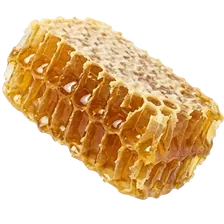
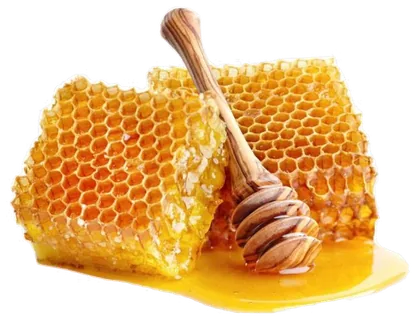
SUBUR is sold as a raw honeycomb blend, and this site says its base is not heat-treated. By the argument above, that description carries exactly the weight of anyone else's: it is the seller's account of a route, not a certificate. No test result is published here, and no certification of any kind.
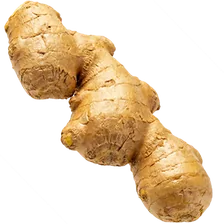
Everything around the adjective is checkable. All ten ingredients are named on the label and on the ingredients page — comb, black seed, saffron, ginseng root, ginger, cinnamon, star anise, nutmeg, and walnuts and almonds ground in. A named list is something a buyer can hold a seller to. An adjective is not.
So what do you do with a jar that says raw?
Read it as a description, not a grade. Turn the jar round to the ingredient list, find the allergen line, and open it if you are buying in person. Ask the seller what was done to the honey — an answer and a refusal both tell you something.
If you want a comb blend opened in front of you before you pay, the two Selangor branches and the online storefronts are on the where to buy page. The word on the lid settles nothing. Two minutes with the back of the jar settles most of it.
The list is the checkable part
Ten ingredients, every one named. Read them before you read the adjective.
See the ten ingredientsFrequently asked questions
Is "raw honey" a legal term in Malaysia?
No. Malaysia's food rules define processing terms for some foods — raw milk, raw cream, raw fruit — but the standard for honey is compositional. It says what honey is and sets limits on what is in the jar, without describing a processing route. So no body grants the word for honey and no body withdraws it.
What is the difference between raw honey and unfiltered honey?
In practice they overlap, but they claim different things. Unfiltered points only at filtration, and its result is partly visible: cloudiness, sediment, particles left in. Raw is broader and usually implies no heating either, which nothing in the jar reveals. Neither word is defined for honey, so a seller may use one, both or neither.
Is unpasteurised honey the same as raw honey?
Sellers use them interchangeably, though they are not identical claims — unpasteurised denies heating only, while raw is usually meant to deny fine filtration as well. The word pasteurised is defined in Malaysia's rules for milk and cream, with the label wording fixed. For honey, neither word carries a definition behind it.
Who checks the word "raw" before it goes on a honey jar?
Nobody, because there is no definition for a check to be measured against. There is no register of raw-honey producers and no approval step tied to the adjective. What Malaysian rules do govern on a label are the required particulars — the ingredient list, the allergen declaration, the date marking, the seller's details — and those are worth reading first.
Why does the word appear on so many honey jars, then?
Because it describes a real difference that buyers care about, and because nothing stops it. A jar that skipped fine filtration behaves differently on a spoon: thicker, cloudier, quicker to set. Sellers reach for the shortest word that signals that. The problem is not that the word is meaningless — it is that it is unverifiable from outside the jar.
Is SUBUR Honey raw?
It is sold as a raw honeycomb blend, and this site says its base is not heat-treated. That is a seller's description, the same kind of statement any other jar carries, and no certificate sits behind it — this site publishes no certification and no laboratory result. The checkable part is the ingredient list: ten ingredients, every one named.
Is raw honey better for you than processed honey?
This page will not answer that, and no honey seller's page in Malaysia should. The food rules do not permit a product to promise an effect on your body, and attributing the promise to a third party does not change it. What can be described is the honey itself — its texture, colour, aroma and how quickly it crystallises.
What should I ask a seller about how the honey was handled?
Ask three plain questions: was it filtered, was it heated, and what exactly is in the jar. The third has a printed answer you can read on the spot, so start there. The first two rest on the seller's word either way, which is the point of this page — but a clear answer and an evasive one are easy to tell apart.