Buying guide
Why is my honey dark, and does it mean anything?

Why is my honey dark?
Colour in a honey jar comes from four unrelated places: the flowers behind a single-source honey, anything blended into it, time, and heat. Only heat is a fault. Raw honey deepens slowly on its own, so a jar that has shifted over months is behaving normally. One that darkened fast has been warm.
Most people asking why is my honey dark are holding one jar and comparing it against a memory — a supermarket bottle, a listing photo, a friend's jar that pours pale gold. Those are different products, not better ones, and a single colour seen once cannot be read.
Why is my honey dark? Four causes, and only one is a fault
Four causes look identical in a jar and mean completely different things. The nectar source of a single-origin honey. Whatever else was put in the jar, for a blend. Time, because raw honey deepens slowly on its own. And heat, from processing or a warm kitchen. Only the last one is damage.
Four causes of colour, and what each one is telling you
The nectar source
- Where it shows up
- A single-source honey named for a bee, a tree or a flower
- Is it a defect?
- No — it describes a flower, not a grade
Added ingredients
- Where it shows up
- A blend — spices, seeds, ground nuts, comb
- Is it a defect?
- No — read the ingredient list, not the shade
Time passing
- Where it shows up
- A raw jar that has deepened slowly over months
- Is it a defect?
- No — that is what raw honey does
Heat or long warm storage
- Where it shows up
- A jar that darkened fast after you bought it
- Is it a defect?
- Yes — the only one of the four that is
| What made it dark | Where it shows up | Is it a defect? |
|---|---|---|
| The nectar source | A single-source honey named for a bee, a tree or a flower | No — it describes a flower, not a grade |
| Added ingredients | A blend — spices, seeds, ground nuts, comb | No — read the ingredient list, not the shade |
| Time passing | A raw jar that has deepened slowly over months | No — that is what raw honey does |
| Heat or long warm storage | A jar that darkened fast after you bought it | Yes — the only one of the four that is |
Malaysian honeys sit at different points on that range, and our guide to the types of honey on a Malaysian shelf maps who is who. Judge any of them thinly spread on a pale plate; thick glass and a backlit window mislead.
Does dark honey mean better quality?
No. Dark is not a higher grade and light is not a diluted one. Two mirror-image myths circulate in Malaysia at once: English-language articles imply darker honey is the superior product, while local sellers tell buyers that darker means purer. Both use colour to stand in for evidence nobody has produced.
What colour is not
- Not a purity test. A syrup-heavy blend can be dark and a good honey can be pale, which is why our guide to telling real honey from sugar syrup has no colour check in it.
- Not a rating. No Malaysian jar carries a colour number the way an imported manuka jar carries an MGO figure, and no scheme here ranks honey by shade.
- Not a flavour promise. Dark honeys do tend to taste stronger, but that is confirmed with a spoon, not read off the glass.
Why is a spiced comb blend dark from day one?
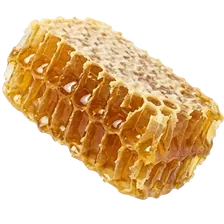
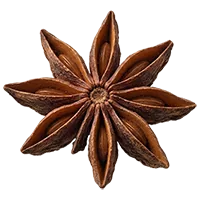
Because of what is in it. Black seed, cinnamon, star anise, nutmeg and saffron all carry their own colour, and ground nuts and raw comb cloud a jar further. A blend built on those ten named ingredients is dark before it reaches a shelf, and it was dark on the first day too.
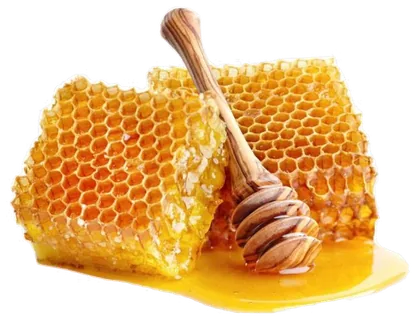
That is SUBUR's case, and worth saying plainly: this is a raw honeycomb blend, not a single-origin honey, so its colour is a fact about the recipe rather than a flower. Comparing it against a photograph of pale honey compares different product classes.
What if the colour changed after I bought it?
That is the observation worth acting on, because a jar in your own cupboard has a baseline: the jar as you first opened it. What matters then is speed. A raw honey deepening gradually over months is just ageing. One that darkened in weeks has been warm.
The fast version has a short list of causes: sun on an open shelf, a spot beside the kettle, an afternoon in a parked car. The storage changed, not the honey. Our guide to storing honey in a Malaysian kitchen says where the jar belongs.
Can colour prove honey is real?
It cannot, in either direction. Dark does not prove a honey is raw, and light does not prove it was watered down. This is the same answer the site gives about crystallisation: it is normal, it is interesting, and on its own it proves nothing. Appearance raises a question; it never settles one.
What can be checked is written down. An ingredient list names what is in the jar in descending order of weight, and the packer's details name who put it there. A seller can be held to those. A shade of amber is not.
So what should you do with the jar in front of you?
Work out which question you are actually asking. If the jar has always been this colour, read the label and the ingredient list and stop treating shade as evidence. If it deepened slowly over months, that is age. If it darkened fast in a warm kitchen, that is a storage answer, and the fix is a cooler, darker shelf.
And if you are choosing between two jars, ignore the colour and ask what has an answer: which flower and which place for a single-source honey, or what exactly is inside for a blend. The two Selangor counters that stock SUBUR take that in person.
Dark because of what is in it
A spiced comb blend is not a graded honey. Every ingredient behind the colour is named.
See the full blendFrequently asked questions
Why is my honey darker than my friend's jar?
Because you are almost certainly holding two different products rather than two grades of one. Filtered supermarket honey is pooled from many hives to look identical bottle after bottle. A raw honey follows its nectar source, and a blend follows its recipe. Neither has any reason to match the other's shade.
Is dark honey better than light honey?
No. There is no scale on which honey is ranked by shade, and no Malaysian jar carries a colour grade. Dark honeys often taste stronger and more resinous, which is a flavour preference rather than a quality ladder. Choose by what you want to taste and by what the label says is inside.
Does darker honey mean purer honey?
No, and this one circulates hard in Malaysia. Colour is not a purity test in either direction: a syrup-heavy product can be dark, and an excellent raw honey can be pale gold. What can be checked is the written ingredient list and the packer's details on the label, not the shade in the glass.
Why has my honey turned darker in the jar?
Two different things, told apart by speed. Raw honey deepens slowly as it ages, alongside crystallising and separating a little, and none of that is a defect. A jar that darkened noticeably within weeks is a heat answer instead: sun on an open shelf, a place beside the kettle, hours in a parked car. Either way you have a baseline — the jar as it looked when you first opened it.
Does black seed make honey black?
It contributes, but it is rarely acting alone. In a blend the colour is cumulative: black seed, cinnamon, star anise, nutmeg and saffron each carry pigment, and ground nuts and raw comb cloud the honey on top of that. The result is dark from the day it is made, by composition rather than nectar.
Is very light honey watered down or fake?
Pale colour is not evidence of either. Plenty of honeys are naturally light, and filtering also lightens the look of a jar without anything being added to it. If you want to judge what is in a honey, work from the label and from the seller's answers, not from how it looks against a window.
Does heating honey change its colour?
Yes. Heat darkens honey, whether the warmth came from processing before it was bottled or from your own kitchen afterwards. The aroma usually flattens alongside the colour. That is the reason a jar kept in a dark, low cupboard looks and smells closer to the way it did on the day you opened it.
Why is SUBUR honey dark?
Because of what is blended into it. It is a raw honeycomb blend carrying black seed, saffron, cinnamon, star anise, nutmeg, ginger, ginseng and ground walnuts and almonds, and those pigment a jar far more than any nectar source does. It is not a single-origin honey, so no floral colour applies to it.
Is there a colour grade for honey in Malaysia?
Not one you will find on a shelf here. Imported jars sometimes carry a measured figure, such as an MGO number on manuka, but that measures a named compound rather than a shade. No Malaysian jar sorts honey by how dark it is, and SUBUR publishes no colour figure either.