Comparison
Honeycomb vs beeswax: what is actually different?
What is the difference between honeycomb and beeswax?
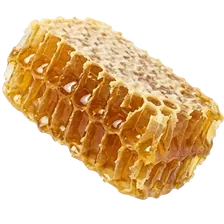
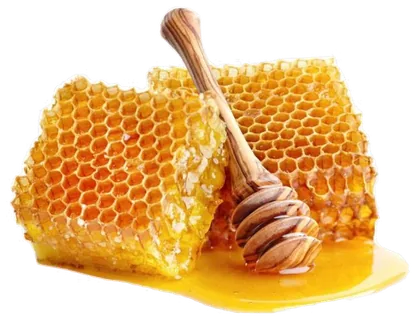
Beeswax is the material; honeycomb is the structure built from it. The FAO defines a honeycomb as a small section of completely sealed comb built of virgin beeswax — so comb is wax plus the honey sealed inside it. Beeswax on its own carries no honey and is sold as a raw material.
What exactly is beeswax?
It is a secretion, not a collected material. The FAO records that it comes from eight wax glands on the underside of the abdomens of young bees. In the United States it has a formal food definition: beeswax is described in federal regulation as a secretory product of honey bees used as a structural material in honeycombs, and it is affirmed as generally recognised as safe at levels not exceeding good manufacturing practice.
How do propolis and royal jelly differ from it?
Both come from the hive, but neither is wax. The FAO describes propolis as a mixture of various amounts of beeswax and resins collected by the honeybee from plants — so it is partly gathered rather than wholly secreted. Royal jelly is different again: it is secreted by the hypopharyngeal gland of young worker bees.
Which of these can you actually eat?
Four hive products, side by side
Honeycomb
- Where it comes from
- Wax cells built by bees, filled with honey and sealed
- Eaten as sold?
- Yes — the honey and the wax together
Propolis
- Where it comes from
- Beeswax mixed with plant resins the bees collect
- Eaten as sold?
- Sold as a supplement, not as a food ingredient
Royal jelly
- Where it comes from
- The hypopharyngeal gland of young nurse bees
- Eaten as sold?
- Sold as a supplement, never stored by the colony
| Where it comes from | Eaten as sold? | |
|---|---|---|
| Honeycomb | Wax cells built by bees, filled with honey and sealed | Yes — the honey and the wax together |
| Propolis | Beeswax mixed with plant resins the bees collect | Sold as a supplement, not as a food ingredient |
| Royal jelly | The hypopharyngeal gland of young nurse bees | Sold as a supplement, never stored by the colony |
Is beeswax digested when you swallow it?
Probably not, but the evidence is thinner than most sources admit. JECFA states that it is generally believed waxes are not digested or absorbed from the alimentary tract in most mammals including man, and then adds directly that there are no original research data available to support this claim. That is an honest gap, and worth knowing.
Does any of this affect which one you should buy?
It mostly settles what you are buying it for. Comb is food. Beeswax is a material. Propolis and royal jelly are sold as supplements and are regulated differently in Malaysia from a food — a distinction covered in our guide to reading a honey label in Malaysia.
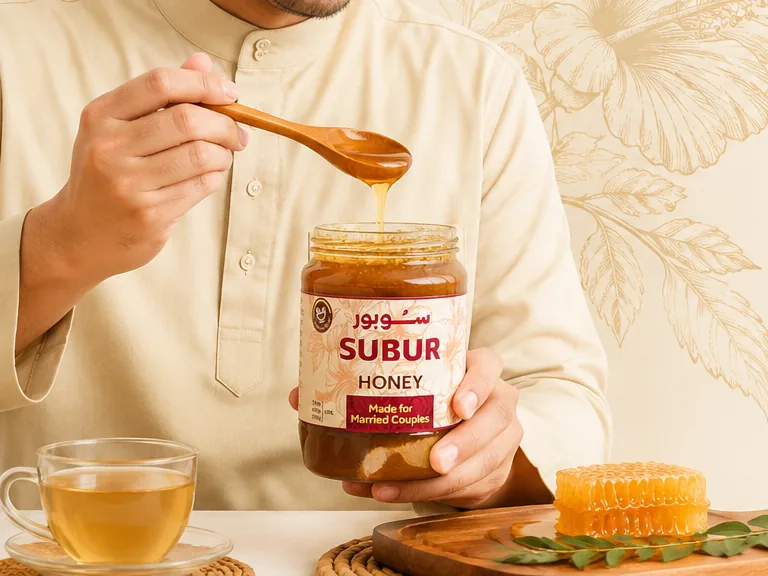
For comb specifically, the practical questions are price, condition and where to find it, which our guide to honeycomb honey in Malaysia answers, and how honeycomb is made explains why it costs what it does. SUBUR uses raw honeycomb as the base of its blend rather than a processed syrup — the full ingredient list is on the benefits page.
Comb as an ingredient, not a garnish
See how raw honeycomb sits at the base of the blend, alongside the other nine named ingredients.
See the full ingredient listFrequently asked questions
Is honeycomb the same thing as beeswax?
No. Beeswax is the material bees secrete; honeycomb is the structure they build from it, with honey sealed inside. The FAO defines a honeycomb as a small section of completely sealed comb built of virgin beeswax. Buying comb means buying wax and honey together, in the form the bees left it.
Is beeswax the same as the wax in candles?
Beeswax candles are made from the same secretion, but food use and candle use are graded and cleaned differently. In the United States beeswax has a formal food definition as a secretory product of honey bees used as a structural material in honeycombs.
What is royal jelly and why is it expensive?
It is secreted by the hypopharyngeal gland of young worker bees. The FAO records that it is always fed directly to the queen or the larvae as it is secreted and is not stored, so there is no reserve to harvest — it has to be collected from individual cells, which is what makes it costly.
Did EFSA set a safe daily limit for beeswax?
No. EFSA found the available data insufficient to establish an acceptable daily intake, and concluded instead that the uses assessed were not of safety concern. That is a different statement from approving a numeric daily limit, and it should not be reported as one.
Can you be allergic to beeswax?
JECFA noted that beeswax might have allergenic potential and that consumers should be made aware of its presence in foods. Anyone who reacts to bee products or who has a known allergy should raise it with a doctor rather than deciding from a product label.
Which hive product is in SUBUR?
Raw honeycomb, used as the base of the blend rather than a processed syrup. The other nine ingredients are nuts, spices and roots, all named on the label. SUBUR contains no propolis and no royal jelly.