Buying guide
What is Arabic honey?

What is Arabic honey?
"Arabic honey" is a shop category, not a honey type. It covers unrelated products sold by and to Arab households — single-flower honeys, compounded blends, plain raw comb, and jars carrying a country claim. It tells you which shelf a jar sat on. It guarantees no origin, no flower and no grade.
The phrase is on shopfronts, on marketplace listings and in conversation, and almost nothing online explains it. Search it and you get product pages. So here is the plain version, from a seller with reason to be careful with it.
What is Arabic honey actually describing?
A group that a shopkeeper, a seller or a customer put the jar into. Nobody defines it. No food authority in Malaysia or anywhere else recognises "Arabic honey" as a category with rules behind it, so two jars carrying the phrase may share nothing else at all.
Compare the parts of a label that are defined — the ingredient list, the packer, the net weight declaration, which reading a honey label in Malaysia works through. "Arabic honey" is none of them. It belongs with "wild" and "premium": words a seller chose.
Which honeys get sold as Arabic honey?
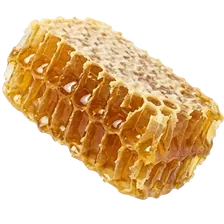
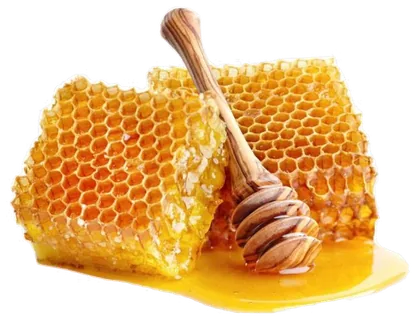
Four different things, mostly. A single-flower honey, sidr being the best known. A compounded blend — khalta — where honey is packed with spices, seeds or ground nuts. Plain raw comb, cut and jarred. And liquid honey with a country printed on the front.
What the shelf term covers, and what really judges each one
A single-flower honey
- What it is
- One nectar; the honey is named after that flower
- What actually decides quality
- Provenance — country, region, season
A khalta blend
- What it is
- Honey compounded with named spices, seeds or nuts
- What actually decides quality
- Disclosure — is every ingredient really in the jar
Raw comb
- What it is
- Wax comb cut and jarred, honey still inside it
- What actually decides quality
- Condition — comb intact, jar sealed and dry
A country claim
- What it is
- Liquid honey with an origin printed on the front
- What actually decides quality
- Whether the seller can name the place
| Sold as "Arabic honey" | What it is | What actually decides quality |
|---|---|---|
| A single-flower honey | One nectar; the honey is named after that flower | Provenance — country, region, season |
| A khalta blend | Honey compounded with named spices, seeds or nuts | Disclosure — is every ingredient really in the jar |
| Raw comb | Wax comb cut and jarred, honey still inside it | Condition — comb intact, jar sealed and dry |
| A country claim | Liquid honey with an origin printed on the front | Whether the seller can name the place |
Sidr is what most people mean by the phrase, and sidr is a floral source rather than a country — what sidr honey is, and where it is harvested covers that, so this page will not.
Does Arabic honey promise an origin, or a grade?
Neither. It is the weakest origin signal there is — an adjective about a shop and its customers, not a declaration about a place. Honey is produced in Yemen, Saudi Arabia, Oman, Egypt, Jordan and Syria among others, and a jar labelled this way in Kuala Lumpur may hold none of it.
An origin claim has to name a country before it is one. A grade means something only when a named body checks batches against a published method and can withdraw the mark — and here there is no scale and no issuing body. What can be checked is what is in the jar and who stands behind it, the two questions that sort out the Malaysian honey shelf.
What should you ask before buying honey sold as Arabic honey?
Ask what the jar is, not what it is called. Which of the four is it — one flower, a blend, comb, or a country claim? Then ask the question that fits. Someone who handles the product answers in a sentence; a reseller changes the subject.
Four questions, in order
- Which of the four is this?. Everything else follows from it.
- If it names a flower, which country and which season?. "Imported" is not provenance, and neither is "Arabic".
- If it is a blend, is everything inside on the label?. "Selected herbs" is phrased that way because nothing in it is checkable.
- Who packed it, and who do I go back to?. The packer or importer is on the label. A name beats an adjective.
Is SUBUR Arabic honey?
By the shelf definition, yes — a compounded blend sold in Malaysia by an Arabic grocery. By any stronger reading, no. SUBUR is not sidr, not a single-flower honey and not an import with a country on the front. It is a raw honeycomb blend of ten named ingredients, and no floral source is published.
That gap is the point of this page. The category says where a jar is sold, and SUBUR sits in it honestly. It is not evidence of where anything was harvested — no harvest location is published at all.
So what should you actually buy?
Decide which of the four you want before the phrase decides for you. Want one flower and one place: buy a single-flower honey from a seller who answers origin questions. Want everything in the spoonful: buy a blend that names every ingredient. The phrase is the aisle, not the product.
Then buy it where you can put the question to a person. SUBUR is sold through four channels and no fifth: two Berkat Madinah counters in Selangor plus the store's own Shopee and TikTok Shop, all four on the retail page. Whatever the label leaves out, ask first.
A blend sold in an Arabic grocery — and it says so
No flower claimed, no valley, no grade. Ten ingredients, all written down.
See the ten ingredientsFrequently asked questions
Is Arabic honey a type of honey?
No. A honey type is defined by something checkable — the bee, the flower, or how the honey was handled after the hive. "Arabic honey" is defined by who sells it and who buys it, which is a fact about a shop rather than about a jar. Two jars under the name can be entirely different products.
Is Arabic honey the same as sidr honey?
No. Sidr is one specific honey, made from the nectar of a single tree, and it is the best-known thing sold under the wider phrase. But the phrase also covers compounded blends, plain comb and liquid honey with a country claim on the front. Most honey sold as Arabic honey is not sidr.
What is khalta honey?
Khalta means a mixture. It describes honey compounded with other named foods — spices, seeds, ground nuts — rather than honey from one flower or one place. Because a khalta is a recipe, the fair test is disclosure: does the label name every ingredient, and does the jar match that list?
Does honey sold as Arabic honey have to come from an Arab country?
No, and nothing obliges a seller to prove it did. The phrase is not an origin declaration and no authority polices it. If country of origin matters to you, look for a country printed on the label as a country, and ask which region and which harvest before you pay a premium.
Why is honey sold as Arabic honey often more expensive?
Sometimes for a real reason, sometimes for the words. A scarce single-flower honey costs more because very little of it exists. A blend costs more because of what is physically added to it. The category name adds nothing on its own, so ask which of the two you are paying for.
Where do you buy Arabic honey in Malaysia?
Mostly through specialist grocers rather than supermarket aisles, which is why the search is usually phrased as a shop search. SUBUR itself is sold through four channels only: two Berkat Madinah counters in Selangor, the store's Shopee storefront and its TikTok Shop. It is not stocked in supermarkets or pharmacies.
Is Arabic honey raw honey?
Not necessarily, and the phrase says nothing either way. Some of what is sold under it is raw comb straight from the hive; some is filtered, heat-treated liquid honey in a decorated jar. Raw is a claim about processing, and the shelf name is a claim about nothing, so check them separately.
Can you tell Arabic honey apart just by looking at it?
No, because there is no single thing to look for. Colour, thickness and darkness vary enormously within the category, and they tell you about flowers or added ingredients rather than about origin. The label and the seller's answers are the only checkable parts of the purchase, so both matter more than appearance.